

Gas Sampling Bags


Gas Sampling Bag
Description
A Gas Sampling Bag is used for all gases and air sampling types, ultimately becoming a great alternative to the canisters /tubes. It is beneficial for sampling in part-per-billion (ppb) to part-per-million (ppm) levels of permanent gases and volatile organic compounds (VOCs). The flue gas sampling is an essential process for all the industries and research centers as per the government’s regulations. This bag’s significance is that it makes the process of collecting gas samples and transporting it much simpler than the traditional methods and is cost-effective. At Techinstro, we manufacture and sell it in various types and sizes as per the client’s use and requirements.
Gas sampling bags collect and hold air, gas, VOC, and emission samples for later testing. Lightweight and flexible, they work well for industrial, environmental, laboratory, and field sampling.
Techinstro offers a range of gas sampling bags for different sampling and storage requirements, including Kynar® bags, Tedlar® bags, and multi-layer gas sampling bags. The choice of bag material depends on the type of gas being collected, required sample holding time, chemical compatibility, and testing conditions.
The bags are available in different capacities, valve arrangements, film materials, and fitting options. They can be used for routine grab sampling and short-term sample storage before laboratory analysis.
Buy Gas Sampling Bag
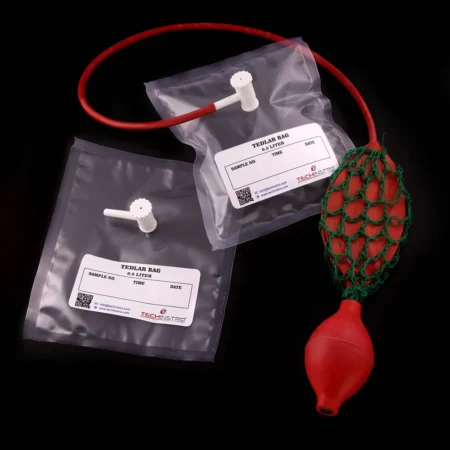
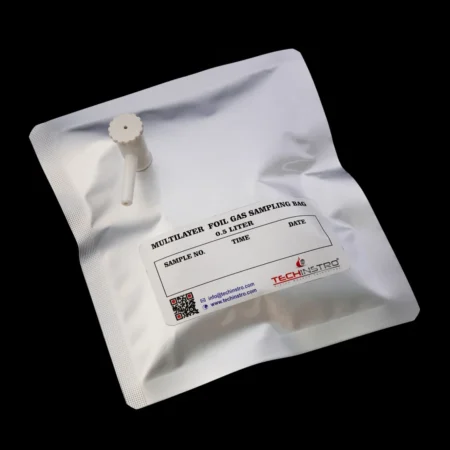
Multi Layer Foil Gas Sampling Bag
Aluminum, Pоlуеthуlеnе, Nylon Film
Polypropylene Valve
4 Layers

Types Of Gas Sampling Bag
Tedlar Bag
It is made up of PVF films and suitable for most permanent gases. We offer a wide range of Tedlar bags as per the requirements of the clients. It is transparent, and the thickness is around 2 mil. These bags are available in sizes of 0.5 liters to 100 liters, whereas we offer pack sizes from 5 to 100 pieces. We also supply a dual valve Tedlar bag as per the applicability.
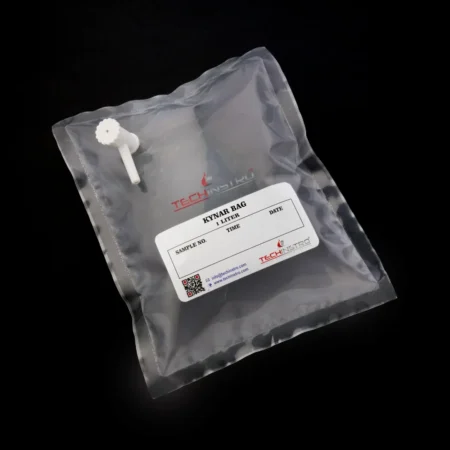
Kynar Bag
It is made from PVDF film. The commercial name of PVDF film is Kynar; hence it is known as Kynar bag. It is a durable and sustainable sampling bag, and researchers can use it for various inert gases.
Multi-Layer Foil Gas Sampling Bags
It has adequate stability for gases of lower molecular weight. Researchers can use them for gases like methane, CO, CO2, and permanent gases. It mainly consists of aluminum foil as one of the layers. The thickness of the film is high as compared to other types due to its multi-layer property.
Compatible with manual and automatic sampling pumps
Tedlar® PVF Sampling Bags
Tedlar® bags use PVF film and are widely used to collect air, VOC, and other gas samples. The clear film makes it easy to see the sample during filling and check the bag before use.
Common uses include:
- Indoor and ambient air sampling
- VOC sampling and screening
- Stack and flue-gas sampling
- Odor sampling
- General laboratory gas collection
Tedlar® sampling bags are available in capacities from 0.5 L to 100 L, depending on the bag design and configuration. Single-valve and dual-valve options are available.
Kynar® PVDF Sampling Bags
Kynar® bags are made from PVDF film, which offers good chemical resistance and mechanical durability. They are used for a range of industrial, environmental, and laboratory gas sampling tasks.
Common uses include:
- Process gas monitoring
- Industrial emission sampling
- Inert gas collection
- Laboratory gas testing
- Environmental field sampling
PVDF suitability depends on the gas composition and the required sample-holding conditions.
Multi-Layer Foil Gas Sampling Bags
Multi-layer foil gas sampling bags have several thin barrier layers. An opaque outer foil layer blocks light and helps protect light-sensitive gas samples during storage and handling.
Commonly collected gases include:
- Methane
- Carbon monoxide
- Carbon dioxide
- Biogas components
- Landfill gases
- Selected permanent gase
The right bag material depends on the gas being sampled, its concentration, expected storage period, and sampling conditions. Check material compatibility and sample holding time before selecting a bag.
Key Features Gas Sampling Bag
- Lightweight and easy to carry
- Easy to handle, transport, and use during laboratory or field sampling.
- Suitable for grab sampling and short-term storage
- Designed to collect gas samples and hold them until testing or analysis.
- Kynar®, Tedlar®, and multi-layer film options
- Different film materials available to suit different gas types and sampling requirements.
- Different capacities available
- Available in multiple sizes for small laboratory samples and larger field sampling needs.
- Optional septum
- Easy sample withdrawal with a gas-tight syringe, without opening the bag.
- PP and PTFE valve options
- Select valve materials based on required chemical compatibility and sampling setup.
- Single-valve and dual-valve configurations
- Choose the valve arrangement based on the sampling and sample-transfer method.
- Different fittings available
- Various fitting options help connect the bag with sampling equipment and accessories.
- Custom capacities and fittings
- We can provide custom sizes and connection options for specific sampling requirements.
- Compatible with manual and automatic sampling pumps
Fluorinated Ethylene Propylene (FEP) fluoropolymer gas and liquid sampling bag (Teflon Bag)
It acts as the best alternatives if the researchers do not want to use the Tedlar bag. It does not produce any levels of dimethylacetamide (DMAC) or phenol like Tedlar sampling bags. However, we do not recommend it for hydrogen sulfide, acetates, ketones, or permanent gases.
Properties
- The gas sampling bag that we provide is leak proof. Therefore, there is no danger of the gas emitting through it.
- It does not contaminate the collected samples and is durable for a long time (up to 72 hours).
- It is handy and easy to use.
- It is easy to transport and does not let any external environment hamper the samples if the operator follows the safety measures.
- It can tolerate and operate at a temperature as high as 82°C (180 °F).
- It is reusable.
Applications of Gas Sampling Bags
Gas sampling bags collect gas or air samples for field testing, laboratory analysis, and short-term storage. They support environmental, industrial, research, and air-quality testing.
Environmental Monitoring
Gas sampling bags collect ambient air and emission samples from industrial sites, waste facilities, and other locations. Labs can test the samples for gases, vapors, odors, and other air contaminants.
Industrial Hygiene
Gas sampling bags collect gas and vapor samples from workplaces, production areas, enclosed spaces, and industrial facilities. These samples can be tested to check workplace air quality.
Stack and Flue Gas Testing
Sampling bags can collect gas from stacks, furnaces, boilers, generators, and other combustion equipment. The samples are then tested to measure selected gases in the emission stream.
Biogas and Landfill Gas Monitoring
Biogas and landfill gases, such as methane, carbon dioxide, and other gas components, are collected in sampling bags. Multi-layer foil bags can be a suitable choice for better gas retention, with their tighter barrier structure and lower gas permeability.
Research and Laboratory Testing
Laboratories use gas sampling bags for gas-mixing tests, reaction studies, instrument checks, calibration work, and short-term gas storage. Different bag materials and valve types can be used depending on the gas, testing conditions, and sample requirements.
Indoor Air and VOC Testing
Gas sampling bags also collect air samples from homes, offices, laboratories, and industrial buildings. They can be useful when checking VOCs, odors, solvents, and other contaminants present in indoor air.
Process Gas and Odor Sampling
Sampling bags can collect gases from industrial processes and suspected leak points. They also support odor investigations at industrial, wastewater, and waste-handling sites.
How to Use a Gas Sampling Bag
Getting a good gas sample means keeping it free from contamination, leaks, and composition changes. Steps can vary depending on the gas, the equipment on hand, and the lab’s method, but here’s the general process most people follow.
- Choose the Right Bag: Choose the right material, size, valve, and connection for the gas sample. The film matters because some gases may react with it, escape, or stay trapped inside.
- Check the Bag Before Starting: Inspect the bag, valve, tubing, and fittings for punctures, cracks, loose spots, or any other visible damage. The bag should be clean and dry before use.
- Condition the Bag: If the sampling method requires it, flush or condition the bag before collecting the sample. Purge it with an inert gas or with the same sample gas. Follow laboratory or industry requirements.
- Set Up the Sampling Equipment: Connect the bag valve to the sampling line, tubing, pump, or vacuum chamber. Make sure the fittings are compatible and secure. Use clean equipment to prevent unwanted substances from entering the sample. Use a vacuum or indirect filling method when needed.
- Collect the Sample: Open the valve and let the gas enter the bag slowly. Keep the flow steady and avoid filling it too quickly, as it can create pressure and affect the sample. Keep the inside of the bag, valve opening, and other contact points clean.
- Do Not Overfill the Bag: Do not force extra gas into the bag or keep it under high pressure. Leave enough space for the gas to expand with temperature changes or during handling.
- Close the Valve Tight: After sampling, shut the valve completely before removing the tubing or any other equipment. Check the connection point for leaks before moving the bag.
- Label It Properly: Write down the key details on the bag, things like:
➔ Sample ID
➔ Where it was collected
➔ Date and time
➔ Type of gas or sample
➔ The specific sampling point, if that applies
- Handle Storage and Transport with Care: Keep the bag in a cool, shaded place and protect it from heat, sharp surfaces, heavy loads, and excessive pressure. Move it gently to avoid damage to the valve or fittings.
- Get It Analyzed in Time: Send the sample off for testing as early as possible. Stay within the holding time that’s been validated for that particular gas and test method. Long waiting times can change the composition and affect result accuracy.
- Follow the Sampling Procedure: Follow lab instructions, the testing method, and workplace or industry standards. Flushing steps, storage conditions, and holding times can change depending on the gas and the test.
Choosing the Right Gas Sampling Bag
The right sampling bag depends on the gas, sample concentration, bag material, and storage time. An incorrect bag can cause contamination, gas loss, or sample changes.
Know the Gas or Compound
Different bag films suit different gases. Some materials may not work well with reactive gases, sulfur compounds, or certain VOCs.
Evaluate Gas Levels
Trace-level samples require clean films with low background contamination and low adsorption. Higher concentrations allow for a wider choice of materials.
Consider the Analytical Method
GC, FTIR, and other techniques may have different tolerances for background interference from the film itself.
Choose the Right Bag Size
Base bag size on sample volume and testing equipment. The bag must have space to collect enough sample for repeat testing, if needed.
Check Valve and Fitting Compatibility
A poor match can cause leaks, contamination, or connection issues with the sampling equipment.
Choose the film type and testing time based on gas stability
Some gases stay stable for days. Others may change or escape within hours. Film type and testing time are based on gas stability.
Select Single-Use or Reusable Bags
Reusable bags need a validated cleaning and conditioning protocol to rule out carryover contamination between samples.
Handling Steps
Before Sampling
- Store bags in a clean, dry place away from chemicals, fumes, and strong odors.
- Keep them protected until use.
- Condition the bag if the test method requires it.
During Sampling
- Avoid sharp surfaces, heat, and rough handling.
- Do not stretch, fold, or press the bag while filling.
- Leave about 20% space for gas expansion.
After Sampling
- Handle the filled bag gently and avoid squeezing it.
- Label it with the sample ID, date, time, and location.
- Keep it away from direct sunlight and heat.
- Check the required holding time (often 48–72 hours for stable gases) and arrange testing within that period.
- Use a new bag for sensitive samples.
Safety Measures Guide
Before Use
- To avoid any absorption of foreign contaminants, store it in a clean and secure place.
- Before sampling, flush nitrogen or any other inert gas to clean the bag for better test results.
During Use
- It is advisable to fill the bag at 80% to 90% of its standard capacity to avoid the risk of bursting it.
- We suggest the clients take at least two gas sample bags to avoid any inconvenience due to any accidental leakage or bursting.
After Use
- It is always advisable for the researchers to avoid reusing these bags as, in some cases, they may absorb the previous samples’ contents.
- Try to get the samples to the test labs before 48 to 72 hours (hold time).
- The testing samples keep away from direct sunlight and high external temperatures.
- If the researcher needs to ship the bags by air, use pressurized opaque containers to prevent damage.
Why Choose Us
When you need a reliable, easy-to-use gas sampling bag for collecting and storing samples, Techinstro delivers. As a manufacturer and supplier of Gas Sampling Bags, Techinstro offers different sizes, materials, valves, and fitting options; select a bag that matches the sampling needs. If a standard option doesn’t meet the requirements, custom sizes and configurations are also available. Whether the operator needs a few bags for laboratory work or a larger quantity for industrial use, Techinstro supports both small and bulk orders, with international shipping and technical guidance that helps to choose the right bag.
“Tedlar® is a registered trademark of DuPont; Kynar® is a registered trademark of Arkema.”